
For weeks, the war skirted the edge of catastrophe without tipping over. Missiles flew, there was much destruction, commanders were assassinated, cities across the Gulf and even in Israel struggled to absorb the shock. But one line held: Energy infrastructure, the arteries of the global economy, remained largely untouched. That is no longer true. Prem Panicker continues his must read daily blog on the Gulf War.

Russia has shared intelligence with Iran that could help Tehran target American warships, aircraft and other military assets in the region, according to United States intelligence assessments cited by media reports, marking the first indication of Moscow's possible involvement in the ongoing conflict. Officials familiar with US intelligence findings said a significant portion of the shared information reportedly includes imagery from Russia's network of surveillance satellites.

Prime Minister Narendra Modi was conferred with the 'Speaker of the Knesset Medal' in recognition of his contribution to strengthening strategic relations between India and Israel, making him the first leader to receive this honor.

Suryakumar Yadav discusses his desire to play Test cricket, his challenges with the ODI format, and his comfort and mastery in T20 cricket in an exclusive interview.

Suryakumar Yadav believes India's T20 talent pool is so deep that it could field multiple international-quality teams, crediting the IPL and domestic structure for this dominance.

'There is no shortage of fuel whatsoever.' 'India is stock surplus as far as petrol and diesel are concerned.'

The United States is facing growing discontent from its Gulf allies after several countries in the region complained that they were not given advance notice of the US-Israel strike on Iran that triggered widespread retaliatory attacks, according to media reports.

United States President Donald Trump on Friday declared that there would be 'no deal with Iran except unconditional surrender' amid the escalating West Asia conflict, asserting that Tehran must capitulate before any diplomatic negotiations can proceed.

Pakistan's Prime Minister Shehbaz Sharif contacted Saudi Crown Prince Mohammed bin Salman to express solidarity amidst escalating regional tensions following attacks in Iran and the Gulf region.
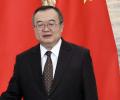
The 61-year-old senior diplomat was taken away for questioning in late July after returning to Beijing from an overseas work trip, the paper reported, quoting people familiar with the matter.

'We are profoundly energy-dependent on the Gulf. That dependency must now be redirected towards the United States, because we require American permission to procure oil.' 'We additionally require Iranian permission to acquire oil from that source. So India now has to seek two separate permissions merely to secure its energy supply.' 'Should we be compelled to source from America, or from Venezuela -- which is, in effect, American-controlled supply -- that will inevitably carry a price premium, an elevated shipping cost, and a considerably extended delivery timeline, given the distances involved.'

Chinese foreign ministry spokesperson Mao Ning said that the country believes that dialogue and negotiation are the only viable solutions to resolving disputes and that the continued escalation of the conflict serves no one's interests.

Let us start with ourselves. If we can reduce our LPG consumption by half, the problem is solved. Reduce wastage. Alter eating styles. Diversify methods of food preparation, suggests Vice Admiral Biswajit Dasgupta (retd).

What we are watching is something different: A fog manufactured and maintained by the people who started the war, so that the question of why it was started never has to be answered, observes Prem Panicker in his must read blog on the war in the Middle East.

Sri Lanka has established emergency hotlines and is closely monitoring the situation in West Asia following escalating tensions, urging restraint and de-escalation from all parties involved.

'Our diplomacy should have been focused on preventing war and avoiding the inevitable disruptions it would cause, posing a real risk to India's growth story,' asserts former foreign secretary Shyam Saran.

US President Donald Trump stated that the decision regarding the conclusion of the conflict with Iran will be a 'mutual' decision made in coordination with Israeli Prime Minister Benjamin Netanyahu.

Tensions escalate at the UN Security Council as the US and Israel defend their military actions against Iran, while Iran condemns the strikes as war crimes, raising fears of a wider Middle East conflict.

British Prime Minister Keir Starmer has called for a negotiated settlement with Iran and deployed additional fighter jets to West Asia to strengthen the UK's defensive operations.

'The entire US ecosystem built over decades at the bases in the Gulf region, especially the UAE, costing trillions of dollars have been decimated, dealing a mortal blow to the US Central Command's war capability,' points out Ambassador M K Bhadrakumar.

The BJP has criticised the Congress party for allegedly prioritising its vote bank and outdated ideologies over India's national interest and citizen safety in its foreign policy approach towards Iran.
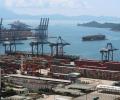
With the Iran war escalating sharply and crisis deepening in the global energy market, India on Monday unveiled a coordinated plan to support exporters and shippers caught in the fallout.
National Conference President Farooq Abdullah has voiced his concern over the escalating violence in West Asia, urging all parties to prioritise dialogue and diplomacy to de-escalate tensions and protect civilian lives.

Fight on toward goals that keep receding, or exit with most objectives unmet. Trump is agitated, his poll numbers falling below the Plimsoll line, his base fractured between those who back the war and those who remember that he campaigned on ending them.

Iran's Islamic Revolutionary Guard Corps (IRGC) claims control of the Strait of Hormuz and reports striking a US destroyer, escalating tensions in the Middle East following retaliatory strikes between Iran, the US, and Israel.

Pakistan declared an 'open war' with Afghanistan following airstrikes targeting Taliban fighters in response to alleged cross-border attacks. The situation has drawn international concern, with calls for de-escalation and diplomatic resolution.
Pakistan's Prime Minister Shehbaz Sharif chaired a high-level meeting to review regional and internal security in light of recent events in Iran and Afghanistan.

The US torpedo attack on the Iranian warship IRIS Dena in international waters was a lawful act of war between belligerents, not a diplomatic or strategic embarrassment for India, asserts Vice Admiral Biswajit Dasgupta (retd).

The UN Security Council, with India's support, has adopted a resolution condemning Iran's attacks on Gulf Cooperation Council countries and Jordan, demanding an immediate cessation of hostilities and denouncing threats to the Strait of Hormuz.

Lok Sabha Speaker Om Birla will represent India at the swearing-in ceremony of Bangladesh's next prime minister, Tarique Rahman. Foreign Secretary Vikram Misri and Secretary-General of Lok Sabha Utpal Kumar Singh are also likely to accompany Birla.

'TTP has vowed to take revenge for the attacks that Pakistan is carrying out against Afghanistan.' 'To diminish this threat, Pakistan is hitting Afghanistan hard.'

We know in our heart that speaking the truth on this stupid Iran war will anger Trump and so we look the other way because if we look him in the eye the bully will straighten us out, asserts Aakar Patel.

As days turn into weeks and America loses more planes, as the destruction of trillions of dollars worth military assets piles up, and dead bodies of soldiers return in ever greater numbers in coffins, Trump will have to answer some very difficult questions to save his presidency, notes Ambassador M K Bhadrakumar.

The question is no longer whether the war will expand. It has. The next few days will tell us whether the war stabilises around Hormuz or whether the Strait itself becomes the trigger for a far larger rupture. What to watch for over the next 48 hours is simple: Any move by the US toward direct naval control of the Strait; any credible Iranian attempt to disrupt or mine shipping lanes and, critically, whether energy infrastructure in the Gulf continues to be targeted.If those lines are crossed in tandem, the war will no longer be containable within the region.

India's recent T20 World Cup victory signals a new era of dominance in the format, driven by strategic gameplay, exceptional talent, and the financial power of the BCCI, while other teams struggle to compete.
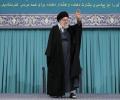
Following US and Israeli strikes in Iran, reports have surfaced questioning the wellbeing of Supreme Leader Ayatollah Khamenei, prompting a swift denial from Iranian officials and condemnation of the military action.

'Despite the large number of missiles and drones we have already launched, we still possess reserves and missile cities whose doors have not yet been opened,' says Iran's Consul-General Saeid Reza Mosayeb Motlagh.

The Cabinet Committee on Security (CCS) has reviewed the evolving situation in West Asia, directing departments to assist Indian nationals affected by recent developments and emphasizing the need for dialogue and diplomacy.

Government officials are reportedly apprehensive that the 30,000 to 40,000 US troops currently deployed within the region could serve as the primary target of the Islamic Republic in the event of an all-out war.

Israel and the United States had a plan. Iran punched back. And now the Gulf is reeling, the world is beginning to feel the pain and, as on date, no one in Washington or Tel Aviv appears willing to admit that the punch has landed, notes Prem Panicker, continuing his must-read blog on the war in the Middle East.
